

India is in the middle of a solar revolution. With soaring electricity tariffs, frequent grid outages, and an ambitious national target of 500 GW of renewable capacity, rooftop solar systems have become a genuine financial and environmental priority for millions of Indian homeowners.
At the heart of every rooftop solar setup sits one critical component that most buyers overlook: the solar inverter. Panels may grab the headlines, but it is the inverter that quietly determines how efficiently your home converts sunlight into usable electricity, and ultimately, how fast your investment pays for itself.
This guide cuts through the marketing noise to help you understand what makes a residential solar inverter truly effective for Indian conditions, which types suit which households, and which brands are earning the trust of homeowners across the country in 2025 and 2026.
Why the Inverter Is the Brain of Your Solar System?
A solar panel generates direct current (DC) electricity. Your home, however, runs on alternating current (AC). The inverter performs this conversion, but its job does not stop there.
A modern residential solar inverter also optimises energy harvest through Maximum Power Point Tracking (MPPT), communicates with the utility grid for net metering, protects your system from voltage spikes and short circuits, and sends real-time data to your smartphone. Choosing a substandard inverter, even with premium panels is like pairing a high-performance engine with faulty transmission: the output will always disappoint.
Types of Solar Inverters for Indian Homes
Understanding the three main inverter types is the first step toward making an intelligent purchase decision.
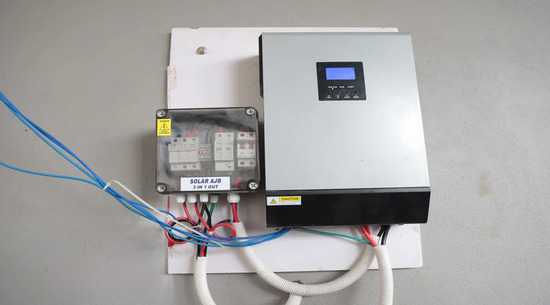
On-Grid (Grid-Tied) Inverters are the most popular choice for urban and semi-urban households that enjoy a reliable utility connection. These inverters synchronise your solar generation with the grid, feeding surplus power back through a net metering arrangement that credits your electricity bill.
They are cost-effective, low-maintenance, and carry the highest efficiency ratings, typically between 97% and 98.7% and Volta Green Inverters match and exceed these standards. The trade-off is that they shut down during a grid outage for safety reasons, offering no backup power on their own.
Off-Grid Inverters are designed for homes disconnected from the utility grid, rural properties, farmhouses, and remote areas. They pair with a battery bank to store excess solar energy for use after sunset or on cloudy days.
While self-sufficient, they carry a higher upfront cost due to battery requirements and are gradually being displaced by the more versatile hybrid category.
Hybrid Inverters represent the fastest-growing segment in India and for good reason. These intelligent units manage solar generation, grid connectivity, and battery storage simultaneously.
They allow homeowners to store solar energy when rates are low and draw from batteries during peak tariff hours or power cuts. For Indian households that experience frequent outages a common reality even in Tier 1 cities a hybrid inverter offers the best of both worlds.