Reliable Voltage Protection for Industries and Businesses
In a rapidly growing industrial and commercial city like Pune, maintaining a stable power supply is essential for smooth business operations. From manufacturing plants in Chakan and Bhosari to IT parks in Hinjawadi and commercial establishments across the city, businesses depend on sensitive electrical equipment that requires consistent voltage to operate efficiently.
Even minor voltage fluctuations can affect machine performance, interrupt production, damage electronic components, and increase maintenance costs. For industries working with CNC machines, automated production lines, servers, medical equipment, and precision instruments, poor power quality can result in significant operational losses.
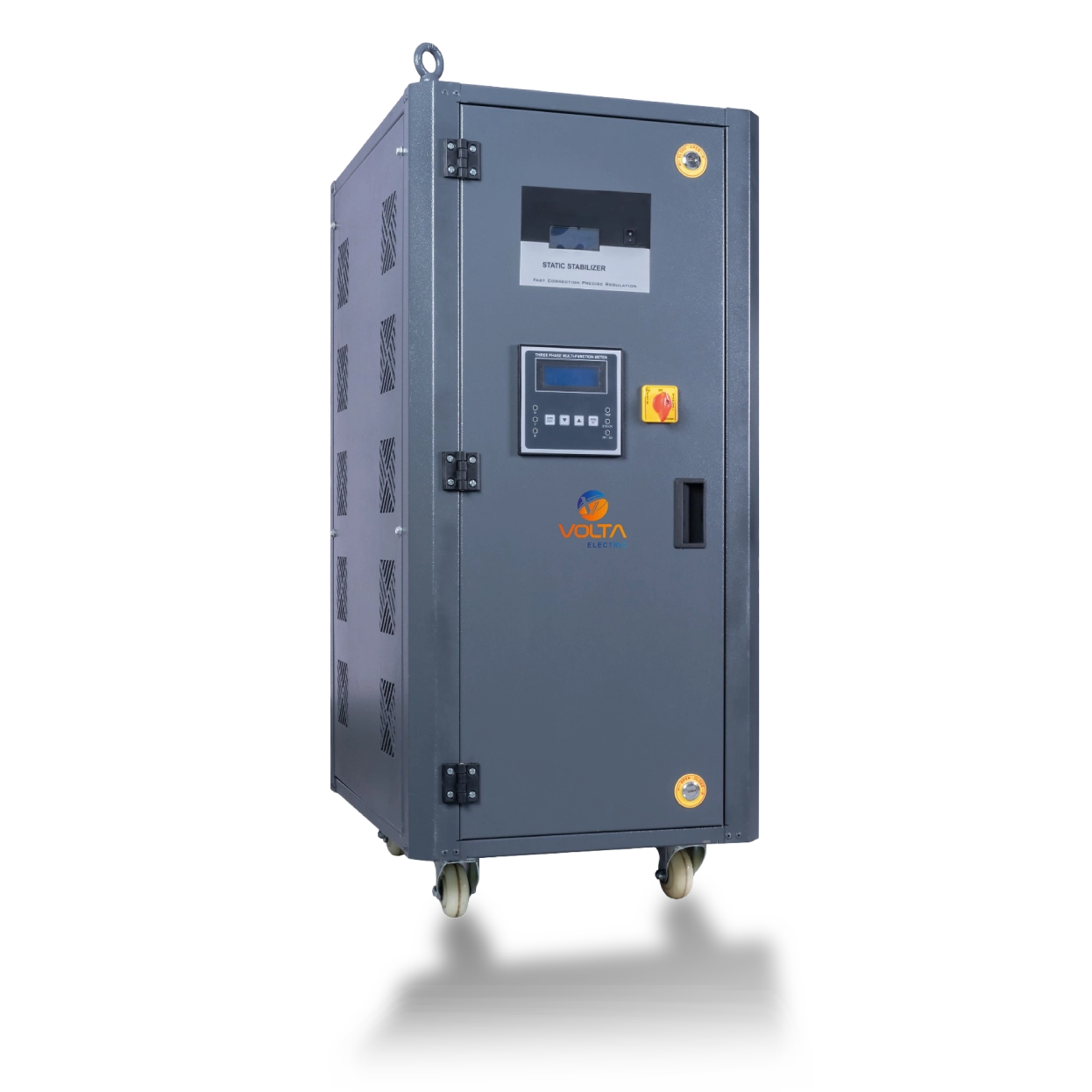
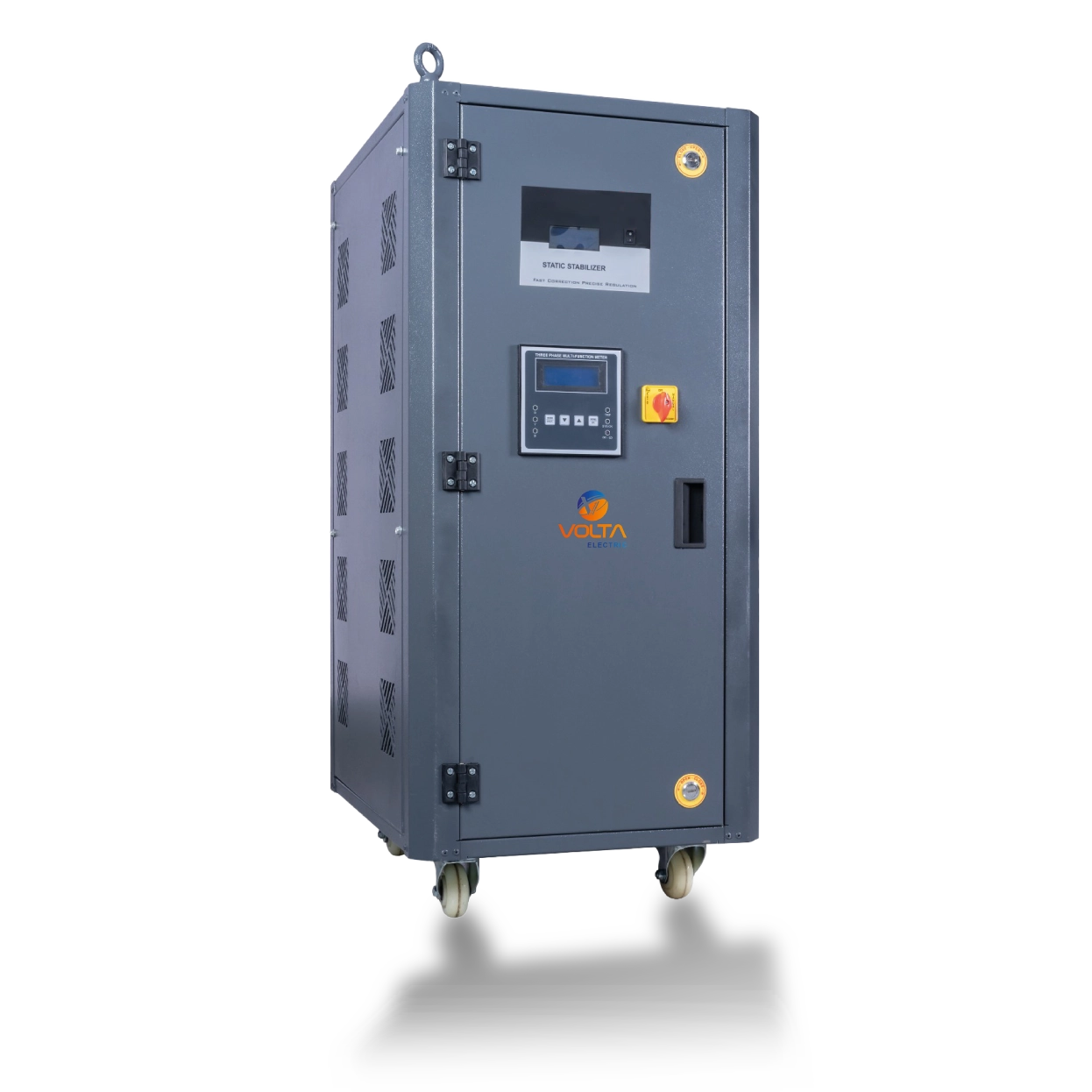
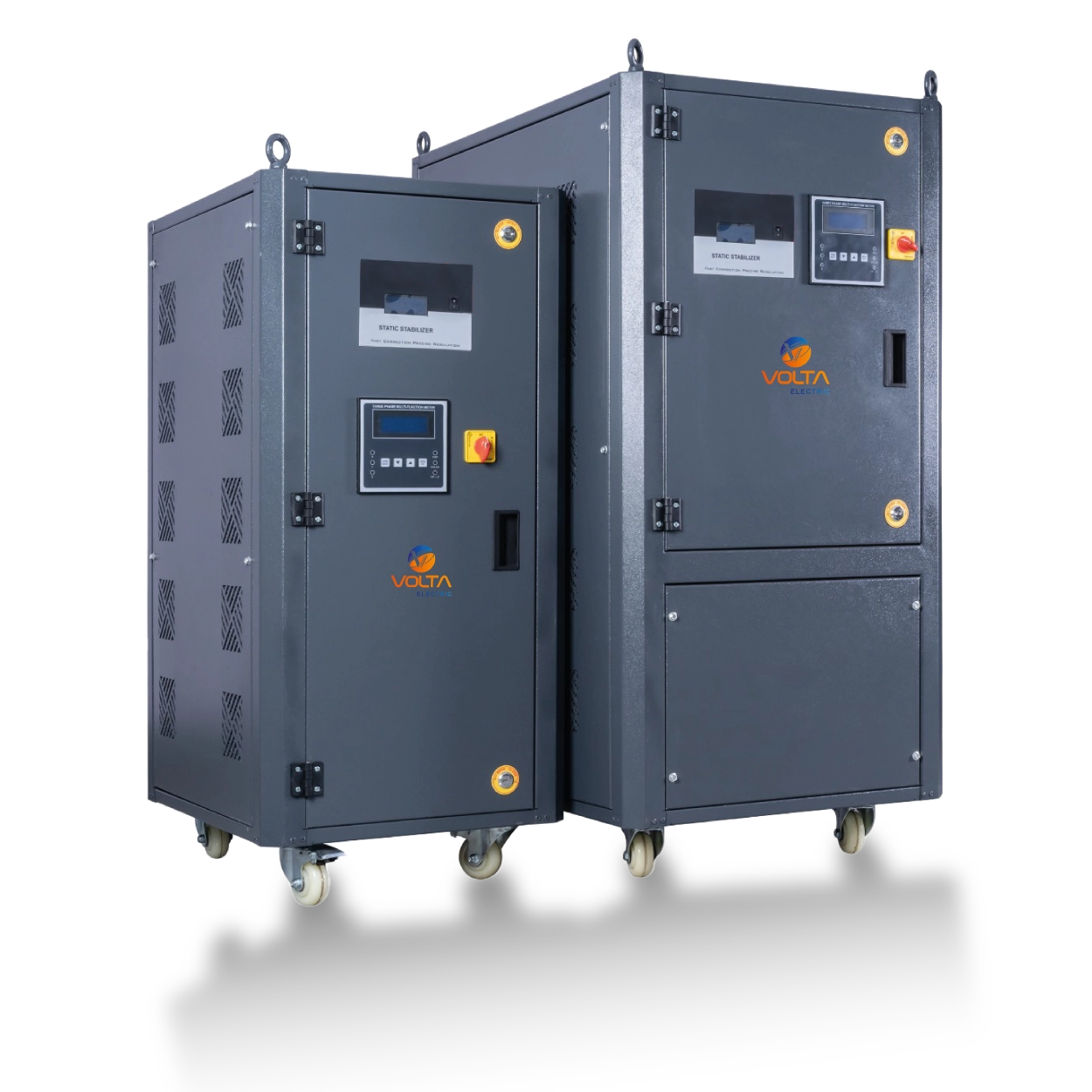
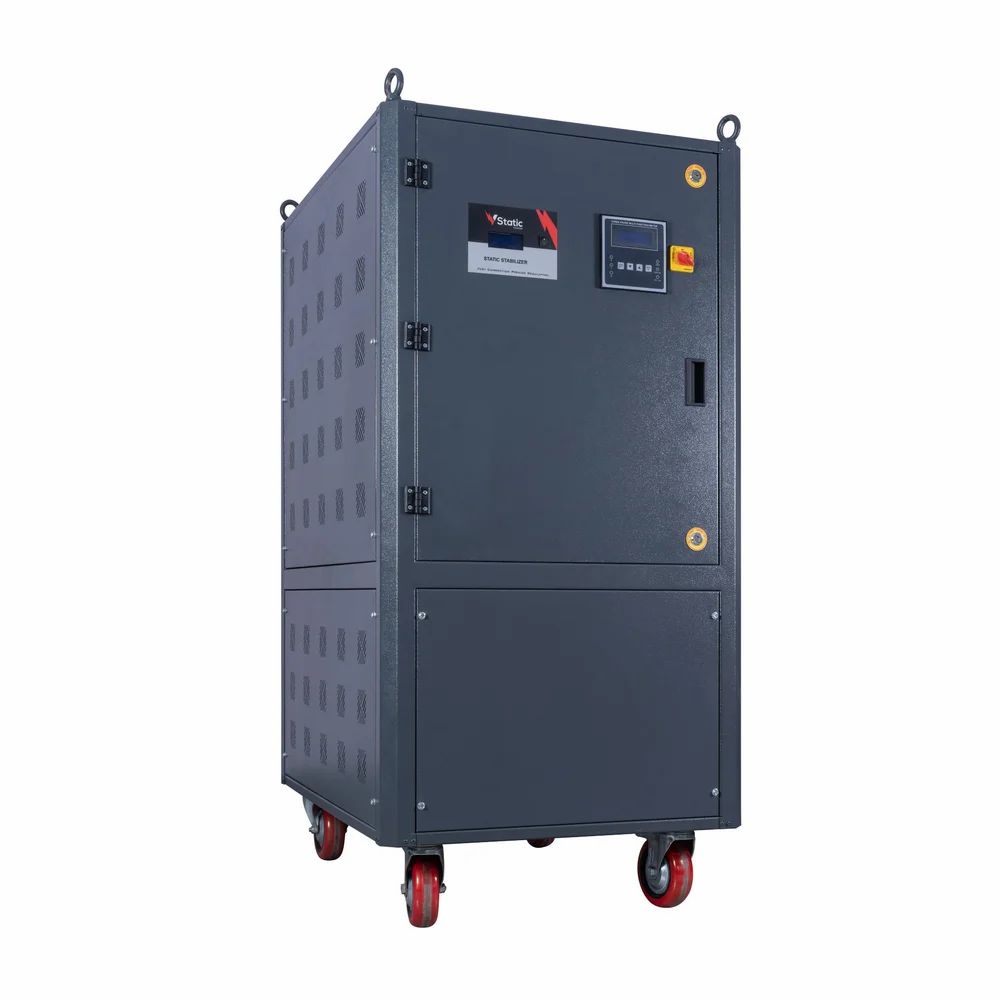
A Static Stabilizer in Pune offers an advanced solution for businesses that need fast, precise, and reliable voltage regulation. Using solid-state power electronics and digital control technology, static stabilizers correct voltage variations without relying on the moving mechanical components found in conventional servo stabilizers.
Whether you operate an automotive manufacturing unit in Chakan, an engineering facility in Pimpri-Chinchwad, an IT company in Hinjawadi, or a hospital in central Pune, the right static stabilizer can help protect critical equipment and maintain reliable operations.
What Is a Static Stabilizer?
A static stabilizer is an electronic voltage regulation system that continuously monitors the incoming power supply and corrects voltage fluctuations to maintain a stable output within its specified operating limits.
Unlike conventional servo stabilizers, which use a servo motor and mechanical voltage-adjustment mechanism, static stabilizers use semiconductor-based power electronics and electronic control systems for rapid correction. This makes them particularly suitable for applications where voltage accuracy, fast response, and dependable operation are important.
For businesses in Pune, where industrial facilities, commercial buildings, and technology-driven operations have different power quality requirements, a properly selected static stabilizer can help reduce voltage-related equipment problems and improve operational reliability.
Why Do Businesses in Pune Need Static Stabilizers?
Pune has a diverse industrial ecosystem that includes automotive manufacturing, engineering, electronics, IT services, pharmaceuticals, healthcare, printing, and packaging. These sectors use equipment that can be sensitive to fluctuations in the incoming electrical supply.
For example, a CNC machining centre in Bhosari may require a stable supply for precision operations, while a data centre in Hinjawadi needs reliable power quality to protect servers and networking equipment. Voltage disturbances can contribute to:
Unexpected machine shutdowns and production interruptions
Malfunctioning PLCs, controllers, and automation systems
Damage or premature failure of sensitive electrical components
Data loss and disruption of IT infrastructure
Increased maintenance and repair expenses
Inconsistent performance of precision equipment
Production delays and missed delivery schedules
The impact can be particularly significant in facilities that operate multiple shifts or rely on continuous production. A static stabilizer helps address voltage variations by regulating the supply within its designed operating range. However, it is important to distinguish voltage stabilization from backup power: a static stabilizer does not replace a UPS or generator during a complete power failure.
Key Benefits of Static Stabilizers for Pune Industries
1. Fast Voltage Correction
Static stabilizers use electronic control technology to respond to voltage changes within their specified response time, which may be measured in milliseconds. This rapid correction can be valuable for sensitive industrial machinery, electronic control systems, and other equipment that requires stable voltage.
2. Precise Output Voltage Regulation
Consistent voltage helps electrical equipment operate within its intended supply range. A static stabilizer with suitable regulation accuracy can help protect sensitive components from the effects of excessive or insufficient voltage. The achievable accuracy depends on the stabilizer model, input conditions, load characteristics, and manufacturer specifications.
3. No Mechanical Moving Parts
Traditional servo stabilizers use mechanical components, including motors and voltage-adjustment mechanisms. Static stabilizers avoid these mechanisms for voltage correction. This can reduce mechanical wear and routine maintenance associated with moving parts, although electronic components, cooling systems, connections, and protective devices still require inspection.
4. Better Protection for Industrial Equipment
Manufacturing facilities around Chakan, Talegaon, Ranjangaon, and Pimpri-Chinchwad often depend on costly machinery and automated production systems. A properly sized static stabilizer can help protect suitable loads against voltage variations, reducing the risk of voltage-related malfunctions.
5. Reduced Downtime
Unexpected equipment shutdowns can affect productivity, labour utilization, and delivery commitments. By maintaining voltage within the specified output range, a static stabilizer can help reduce interruptions caused by voltage fluctuations. Actual results depend on the site’s power quality conditions and the equipment being protected.
6. Lower Maintenance Requirements
Because static stabilizers do not rely on mechanical voltage-correction mechanisms, they may require less mechanical maintenance than conventional servo stabilizers. For facilities operating multiple shifts, this can simplify maintenance planning and reduce certain service requirements.
7. Long-Term Operational Value
The cost of voltage-related problems is not limited to equipment repairs. Businesses may also incur expenses associated with lost production, troubleshooting, rejected components, and delayed deliveries. A suitable static stabilizer can contribute to long-term savings by helping protect equipment and improve operating reliability.
Key Features to Look for in a Static Stabilizer
When choosing a static stabilizer for a commercial or industrial facility in Pune, evaluate the technical specifications rather than relying only on the product’s capacity or advertised response time.
Advanced Solid-State Technology
Semiconductor-based voltage correction enables rapid electronic regulation. This technology is suitable for applications that require fast response and consistent voltage control.
Millisecond-Level Response
Some static stabilizers provide voltage correction within milliseconds under specified operating conditions. Ask the manufacturer for the response-time definition and test conditions, particularly if you intend to protect highly sensitive equipment.
Digital Microprocessor Control
Digital control systems monitor input voltage, regulate output, and manage protection functions. Depending on the design, they may also provide status indicators, fault alerts, and diagnostic information.
Wide Input Voltage Range
Industrial sites may experience variations in their incoming voltage. Select a stabilizer with an input voltage range suited to the actual conditions at your facility. Check whether the rated output can be maintained throughout that range and whether derating applies at extreme input voltages.
High Overload Capability
Certain industrial loads draw higher current during startup or temporary overload conditions. Verify the stabilizer’s overload capacity, duration, and compatibility with the connected equipment.
Compact Installation Design
Space can be limited in electrical rooms, factories, commercial buildings, and technical facilities. Consider the stabilizer’s dimensions, ventilation requirements, service clearances, and installation location.
Reliable Continuous Operation
For facilities running multiple shifts, reliability and thermal performance are important. Review the manufacturer’s operating-temperature limits, cooling arrangements, duty rating, and maintenance recommendations.
Essential Protection Features
A static stabilizer should include protection functions appropriate to the electrical system and the equipment being supplied.
| Protection feature | Purpose |
|---|
| Overvoltage protection | Helps protect connected loads against excessive output voltage |
| Undervoltage protection | Helps prevent operation when voltage falls below permitted limits |
| Overload protection | Responds when the load exceeds specified operating limits |
| Short-circuit protection | Supports safe response to short-circuit conditions as designed |
| Phase failure protection | Detects missing phases in applicable three-phase systems |
| Phase sequence or reversal protection | Helps identify incorrect phase sequence where supported |
| Surge protection | Helps address specified transient overvoltage events |
| Overtemperature protection | Helps prevent operation beyond permitted thermal limits |
| Input supply monitoring | Monitors incoming electrical conditions |
| Frequency monitoring | Detects frequency variations where included in the design |
The exact protection package varies between models. Protection against lightning or severe electrical surges may require appropriately selected external devices and a coordinated earthing system.
A static stabilizer also does not eliminate every power quality problem. If your facility experiences harmonic distortion, frequency instability, brief interruptions, or complete outages, additional power conditioning or backup equipment may be necessary.
Applications of Static Stabilizers Across Pune
Automotive and Auto Component Manufacturing
Pune is an important centre for automotive manufacturing and component production. Facilities in Chakan, Pimpri-Chinchwad, Talegaon, and nearby industrial areas may use CNC machines, robotic systems, welding equipment, inspection instruments, and automated assembly lines. Static stabilizers can help protect compatible equipment from voltage variations that may interfere with control systems and machine operation.
Engineering and CNC Industries
Precision machining and engineering units rely on consistent electrical conditions for machine controls, measurement systems, and production equipment. A suitably specified stabilizer can help maintain voltage within the equipment manufacturer’s permitted range.
IT Parks and Data Centres
Technology businesses in Hinjawadi, Magarpatta, Kharadi, and other commercial districts operate servers, networking systems, storage equipment, and communication infrastructure. Static stabilizers may be useful for voltage regulation upstream of sensitive equipment. However, applications requiring continuous operation during an outage should also include a properly designed UPS and suitable backup power arrangements.
Hospitals and Diagnostic Centres
Hospitals and diagnostic facilities use medical imaging equipment, laboratory instruments, monitoring systems, and other sensitive electrical devices. The stabilizer must be selected according to the specific equipment requirements and applicable medical electrical safety standards. Critical loads may also require UPS backup.
Pharmaceutical and Laboratory Facilities
Pharmaceutical production and testing facilities may use precision instruments, environmental control systems, process equipment, and laboratory devices that require stable electrical conditions. A suitable stabilizer can support reliable operation, subject to the requirements of the connected equipment.
Commercial Buildings and Offices
Commercial buildings in Pune use elevators, HVAC systems, lighting, access controls, and building management systems. A properly sized stabilizer can help regulate voltage for suitable loads. Large motor loads and sensitive electronic equipment may require separate assessment rather than a single stabilizer for the entire building.
Printing, Packaging, and Textile Operations
Printing presses, packaging machinery, and other production equipment can be affected by voltage variations that interrupt operations or affect process consistency. Static stabilizers can help maintain a stable supply for compatible machines, particularly where precise electronic controls are involved.
Available Static Stabilizer Capacity Options
Static stabilizers are available in different capacities to suit residential, commercial, and industrial applications. Common capacity ranges include:
| Capacity | Potential applications |
|---|
| 10 kVA | Small commercial equipment and selected sensitive loads |
| 20 kVA | Workshops, laboratories, and smaller business facilities |
| 30 kVA | Engineering equipment and medium-sized commercial loads |
| 50 kVA | Industrial machinery and larger electrical installations |
| 75 kVA | Production equipment and grouped commercial loads |
| 100 kVA | Manufacturing facilities and larger technical installations |
| 150 kVA | Industrial production systems and larger equipment groups |
| 200 kVA | High-demand commercial and industrial loads |
| 300 kVA | Larger manufacturing facilities and selected industrial applications |
| Custom capacity | Applications with specialized load or voltage requirements |
These are indicative capacity options, not fixed application rules. Actual availability depends on the manufacturer.
The correct capacity should be determined by evaluating the connected load in kVA, power factor, starting current, overload characteristics, phase configuration, input voltage range, and required output voltage.
For example, a machine with a 30 kW active load does not necessarily require a 30 kVA stabilizer. The apparent power requirement may be higher depending on the power factor and other operating characteristics.
Static Stabilizer vs. Servo Stabilizer
Both static and servo stabilizers regulate voltage, but they use different technologies and may be suited to different operating requirements.
| Parameter | Static stabilizer | Servo stabilizer |
|---|
| Voltage correction | Electronic solid-state regulation | Motor-driven mechanical regulation |
| Response time | Often milliseconds, depending on design | Generally slower, depending on design and voltage change |
| Moving parts | No mechanical voltage-correction mechanism | Uses moving mechanical components |
| Maintenance | Lower mechanical maintenance requirements | Requires maintenance of mechanical components |
| Voltage accuracy | Can provide high accuracy, depending on model | Can also provide high accuracy, depending on model |
| Sensitive electronic loads | Suitable models can be appropriate | Suitability depends on response and load requirements |
| Industrial applications | Particularly useful where rapid correction is important | Useful for many general industrial applications |
| Initial cost | May be higher in some configurations | May be more economical in some configurations |
A static stabilizer is not automatically the best choice for every application. A servo stabilizer may be a practical and economical solution for certain loads, while a static stabilizer may be preferable where faster correction and reduced mechanical maintenance are priorities.
The decision should be based on measured voltage conditions, connected equipment, required accuracy, response time, and total ownership cost.
How to Choose the Right Static Stabilizer for Your Business
Before selecting a static stabilizer for your Pune facility, consider these essential points:
Measure the incoming voltage: Record the actual voltage variations during different shifts and load conditions.
Identify critical equipment: Determine which machines or systems require precise voltage regulation.
Calculate the load correctly: Consider kW, kVA, power factor, starting current, and overload requirements.
Check the phase configuration: Confirm whether the installation requires a single-phase or three-phase stabilizer.
Review response time and accuracy: Match the manufacturer’s specifications to the requirements of the connected equipment.
Evaluate protection functions: Confirm the required voltage, overload, phase, temperature, and surge protection.
Consider the installation environment: Review ventilation, ambient temperature, dust, humidity, and available space.
Assess service support: Choose a supplier that can provide technical guidance, installation assistance, and maintenance support.
Compare total ownership cost: Consider the purchase price, maintenance, downtime risk, and expected operating life.
A site assessment by a qualified electrical professional can help ensure that the selected stabilizer meets your actual requirements.
Why Choose a Reliable Static Stabilizer Supplier in Pune?
Selecting the right supplier is as important as choosing the right equipment. Businesses need a solution that matches their electrical requirements, operating conditions, and maintenance expectations. When evaluating a static stabilizer manufacturer or supplier, look for:
Clearly documented electrical specifications
Appropriate voltage regulation accuracy and response time
Industrial-grade design and protection
Capacity options suited to your application
Technical support for load assessment and selection
Professional installation and commissioning support
Clear warranty and service terms
Availability of maintenance and replacement support
A dependable supplier should help you identify the actual power quality problem before recommending a solution. This prevents unnecessary oversizing and ensures that the stabilizer is selected for the equipment it needs to protect.
Protect Your Business with Static Stabilizers in Pune
From automotive plants in Chakan to IT offices in Hinjawadi and engineering units in Pimpri-Chinchwad, businesses across Pune depend on reliable electrical equipment to maintain productivity and meet customer commitments.
Voltage fluctuations can create avoidable operational challenges, particularly where sensitive electronics, automation systems, and precision machinery are involved. A properly selected static stabilizer helps maintain stable voltage, protects compatible equipment, and reduces the risk of interruptions caused by voltage variations. With fast electronic regulation and no mechanical voltage-correction components, it can be a practical choice for facilities where power quality is a priority.
The most suitable solution will depend on your actual load, incoming voltage conditions, equipment sensitivity, and required protection level.
Request a Consultation for Static Stabilizers in Pune
Looking for a static stabilizer for your factory, office, hospital, data centre, or commercial facility in Pune?
Discuss your load requirements, voltage fluctuations, and operating conditions with a qualified power quality specialist. A proper assessment can help you identify the right stabilizer capacity and specifications for your application.
Invest in reliable voltage regulation to protect your equipment, improve operational confidence, and support the long-term performance of your business.